I wake up and scroll. Another “perfect” routine. Another 5 a.m. workout.
Another promise that this time it’ll stick.
It doesn’t.
You’ve tried the vague advice. You’ve tried the extreme plans. You’ve tried forcing yourself into someone else’s idea of discipline.
Only to quit by Wednesday.
Here’s what I know: real life doesn’t run on Pinterest schedules. You’re tired. You’re busy.
You’re not broken because you skip days.
I’ve spent years testing daily movement with people who hate gyms. Desk workers who sit 10 hours. Parents who get four hours of sleep.
Beginners who haven’t lifted anything heavier than a coffee mug.
No theory. No dogma. Just what actually works.
Day after day.
Most fitness content treats consistency like a moral failing. It’s not. It’s physics.
Small inputs, repeated, create real change.
This isn’t about one killer workout. It’s about habits that survive your schedule. Your energy.
Your reality.
I’m not selling transformation.
I’m giving you something you can do today, then again tomorrow, then next week (without) burning out.
That’s why this delivers Fitness Tip of the Day Thespoonathletic you can use. Not admire. Not guilt-trip yourself with. Use.
Why ‘Daily’ Doesn’t Mean ‘Intense’
I used to think fitness meant sweating for an hour. Then I got injured. Twice.
Turns out, consistency beats intensity every time (and) the data backs it up. Meta-analyses show people who move daily (even lightly) stick with it 3x longer than those chasing hard workouts.
You don’t need a gym. You need repetition. That’s why I start most days with 7 minutes of posture resets and breathwork.
It’s enough to shift my nervous system. WHO and ACSM both say that’s legit movement (no) treadmill required.
“Daily” isn’t code for “daily workout.” It means walking to the mailbox. Taking the stairs. Pausing mid-afternoon to roll your shoulders.
These count. They add up. They rebuild your body’s baseline.
Learn more about how small shifts stack into real change.
Here’s what realistic daily movement looks like:
| Level | Time | What It Does |
|---|---|---|
| Foundational | 7. 12 min | Wakes up your nervous system |
| Supportive | 15. 25 min | Builds joint resilience |
| Expressive | 30+ min | Moves energy. Not just calories |
Fitness Tip of the Day Thespoonathletic? Do something today. Not everything.
Just one thing.
Your body remembers frequency. Not fanfare.
The 4 Daily Habits That Beat Any Single Workout
I used to chase the perfect workout. Then I broke my ankle. And everything changed.
Morning light exposure + hydration ritual: I do this within 15 minutes of waking. No phone. No coffee first.
Just open the blinds and drink a glass of water. Light hits your retina and tells your brain it’s time to suppress melatonin. Hydration jumpstarts circulation before cortisol peaks.
(Yes, even if you’re groggy.)
Posture-aware movement every 60 (90) minutes: I set a dumb phone alarm. Stand up. Roll shoulders.
Lift one knee. Hold for three breaths. Why?
Sitting shuts down glute activation (and) stays shut off for hours unless you interrupt it. A teacher I know does hallway walks + shoulder rolls between classes. Her energy lasts all day.
Intentional breathing before meals: Two slow breaths in through the nose, four out through the mouth. Every single time. Before lunch.
Before dinner. Even before snacks. It cues parasympathetic mode.
Digestion actually works better.
Evening movement decompression: Joint circles. Diaphragmatic release. Done right before brushing teeth.
Not optional. Your nervous system needs this reset.
Chronic pain? Swap joint circles for seated neck tilts. Remote work?
Use Zoom mute time for breathwork. Caregiving? Breathe while rocking a baby.
Low motivation? Do one circle. Just one.
These aren’t “nice-to-haves.” They’re non-negotiable.
Fitness Tip of the Day Thespoonathletic isn’t about doing more. It’s about showing up consistently (in) your body, not just at the gym.
I skipped habit #3 yesterday. Felt foggy by 2 p.m. You feel that too?
Customize Your Routine Without the Headache
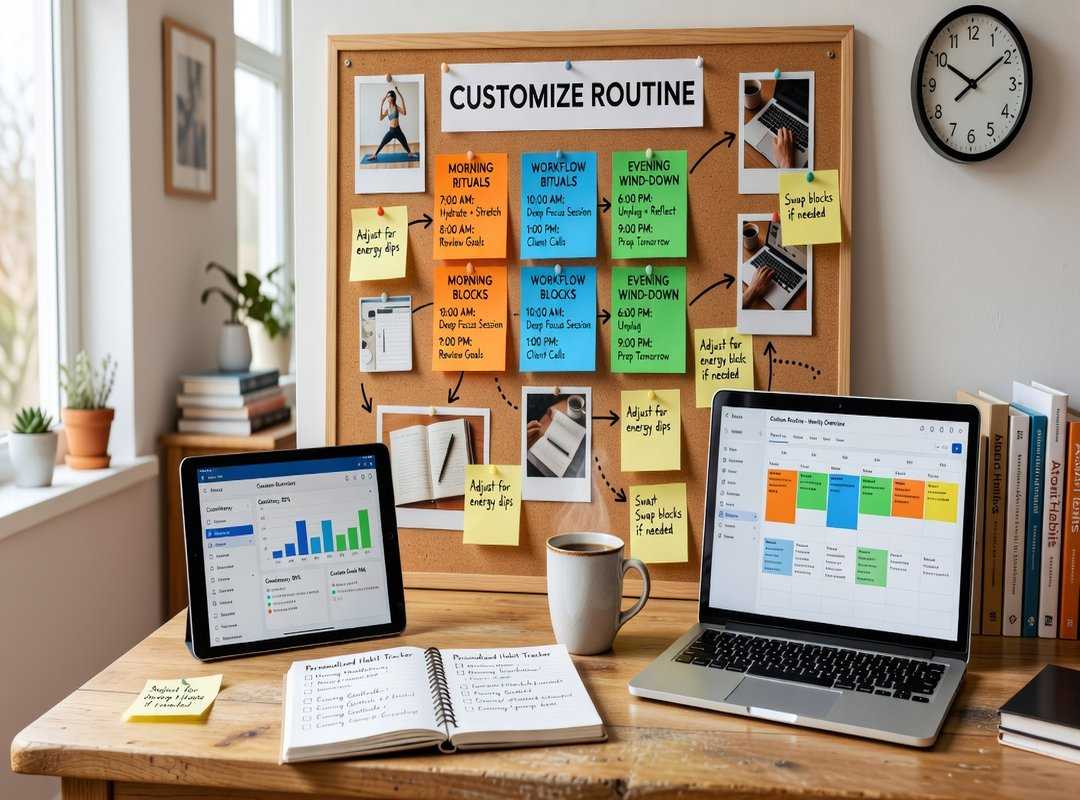
I used to plan workouts like they were military ops. Then I burned out. Twice.
Now I ask three questions every morning. What energy do I have right now? What’s my non-negotiable time window?
What movement feels restorative vs. draining today?
That’s it. No spreadsheets. No guilt.
Just real-time honesty.
A nurse working nights asks those same questions before her 3 a.m. shift. She swaps a 45-minute run for five minutes of breathwork and wall sits (done) in scrubs, standing up. (Yes, wall sits count.)
A new parent with twelve minutes between feedings uses the same filter. She chooses baby-wearing squats and shoulder rolls while rocking. Her “workout” smells like spit-up and lavender oil.
It works.
Progress isn’t tracked in reps or heart rate zones. It’s less afternoon fatigue. It’s easier stair climbing.
You can read more about this in Supplement Management Thespoonathletic.
It’s a calmer stress response when the toddler melts down in Target.
Swapping consistency for novelty is lazy. Ignoring soreness or brain fog is dangerous. Calling something “easy” doesn’t mean it’s useless (it) means it’s working.
And if you’re juggling supplements too? Check out Supplement Management Thespoonathletic.
Fitness Tip of the Day Thespoonathletic: Skip the overhaul. Start with one question. Right now.
When Daily Fitness Advice Fails (And) What to Do Instead
I used to follow “Fitness Tip of the Day Thespoonathletic” like scripture.
Then I got sick. Three times in four months. My HRV tanked.
My motivation vanished.
Turns out, daily fitness rules ignore real biology.
The top three failure points? Advice that ignores your circadian rhythm, assumes your recovery is identical to someone else’s, and treats your body like a machine with fixed inputs and outputs.
That’s not science. That’s guesswork dressed as authority.
Red-flag phrases like “just push harder” ignore nervous system fatigue. “No pain no gain” confuses inflammation with progress. And “you’re lazy if you skip” pathologizes rest. Which your immune system needs.
I’ve watched clients crash on those lines. One woman stopped running entirely after six weeks of forced morning workouts. Her cortisol was sky-high.
Her period had vanished.
She started tracking her energy instead of her reps.
She lowered intensity on low-HRV days. She rested hard during her luteal phase. She skipped gym days when her throat felt scratchy.
Not lazy, just smart.
Her strength came back. Her sleep deepened. Her joy returned.
You don’t need more discipline. You need better data about your body.
Start small. Check how you feel before you move. Not after.
How to Check Body Fitness Thespoonathletic shows exactly how. No apps required. Just honesty and five minutes.
Start Your First Intentional Day Tomorrow
I built Fitness Tip of the Day Thespoonathletic for people who are tired of being exhausted by fitness.
Not from it. Not after it. But by it.
You don’t need hours. You don’t need gear. You don’t need to be perfect.
That myth? It’s wrong. And it’s costing you energy you already own.
Pick one habit from the four. Just one. Do it tomorrow morning.
And the next. And the next.
No tracking. No scorecard. Just show up and notice what shifts.
Your body isn’t broken. It’s waiting for consistency (not) chaos.
Three mornings is all it takes to feel the difference.
You’ll know it in your shoulders. In your breath. In how you answer the phone.
Your body doesn’t need a revolution. It needs reliable, respectful attention (starting) tomorrow.